A wheel hub for construction machinery is a central component of the wheel assembly that houses the bearings, which allow the wheel to rotate smoothly on the axle. It acts as an interface between the axle, the wheel, and the braking system. The functioning of a wheel hub in construction machinery can be broken down into several key aspects:
Support for the Wheel: The hub is the mounting assembly for the wheel. It typically has a flange to which the wheel is bolted. The distribution of the machinery’s weight to the wheel occurs through the hub.
Bearing Housing: The hub contains bearings that reduce friction and allow the wheel to spin with minimal resistance. These bearings can be tapered roller bearings, ball bearings, or needle bearings, depending on the type of construction machinery and the loads it must carry.
Axle Interface: The inner part of the hub is designed to fit onto the axle or spindle. In some designs, the hub rotates around the axle, while in others, the hub may be fixed, and the axle itself rotates.
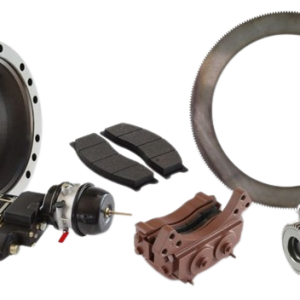
Brake Integration: In vehicles with disc brakes, the hub often has a mounting surface for the brake disc (rotor) to be attached. During braking, the brake caliper applies pressure to the brake pads against the rotor, which is attached to the hub, thus slowing down the rotation of the wheel.
Drive Force Transmission: In cases of driven wheels, the hub also plays a role in transmitting the drive force from the axle to the wheels. For example, in vehicles with hub motors, the motor is actually integrated into the hub itself, providing direct drive force to the wheel.
Sealing and Lubrication: Hubs are designed to keep lubricants in and contaminants out to protect the bearings and ensure their longevity. Seals are used to prevent dirt, water, and other contaminants from entering the bearing area.
Hello, I am Shopply, your new assistant. Before connecting you to my human associates, please make sure to check our "how-to" page to understand how our system works.